Description
The only freshwater member of the cod family; active at night in the cold months.
How to identify it
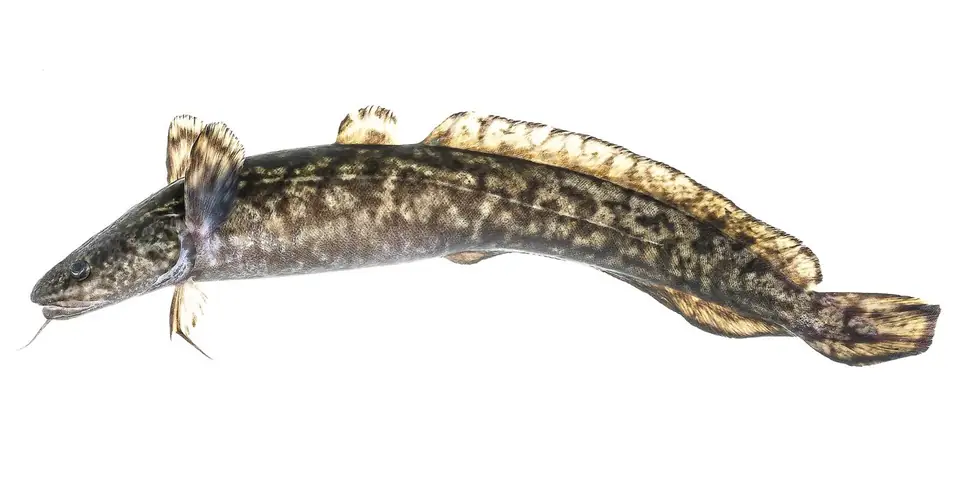
One barbel on the chin, two dorsal fins (the second long), flat head, marbled skin.
Appearance
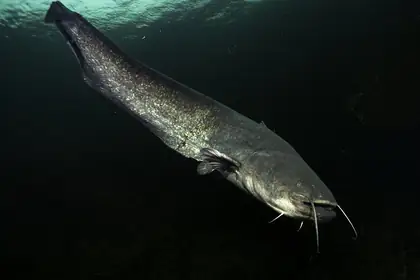
It looks like a cross between an eel and a cod: long body, round at the front and compressed behind, broad, flat head, wide mouth with many small teeth. The unmistakable sign is the single barbel in the centre of the chin, accompanied by two small tubular flaps on the nostrils. The second dorsal and the anal fin are long and low and reach almost to the rounded tail. The skin is slimy, with tiny scales, and the marbled pattern alternates brown and yellowish. It can be told from the wels catfish by the single barbel and the two dorsal fins.
Habitat and habits
It is a cold-water fish: it lives in large, cool rivers, deep lakes and reservoirs, always on the bottom, among stones, roots, trunks and undercut banks, where it hides by day. It tolerates strong current poorly. In summer, when the water warms up, it drops into the deeper, cooler areas and moves little; with the cold it revives, comes close to the banks and hunts actively at dusk and at night. It spawns in the depths of winter, often under the ice.
There's more in the app
This species' bite index, recommended baits and methods, and the rules of the day for every water. Offline too.
Soon on Android and iPhone