Description
A predator of large, slightly turbid waters.
How to identify it
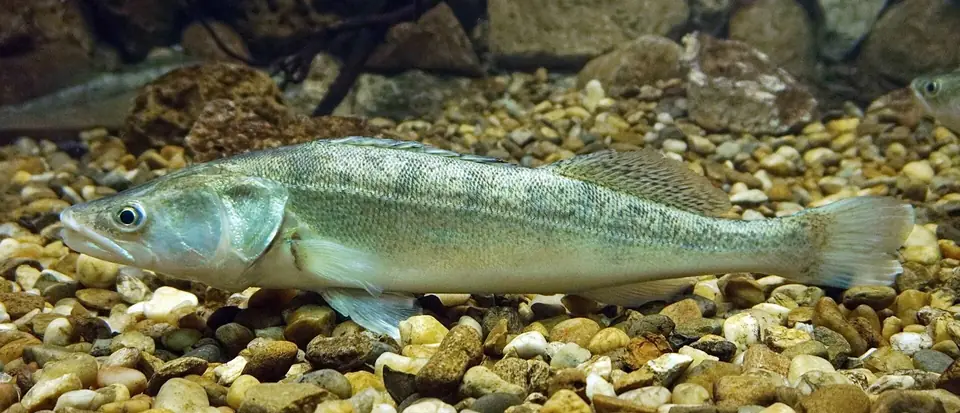
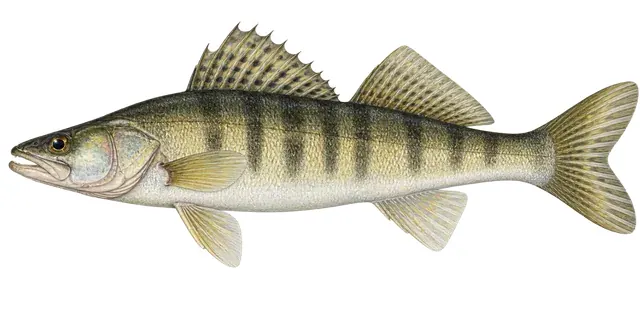
Two separate dorsal fins, large canines, pale, glassy eye, dark bars on the flanks.
Appearance
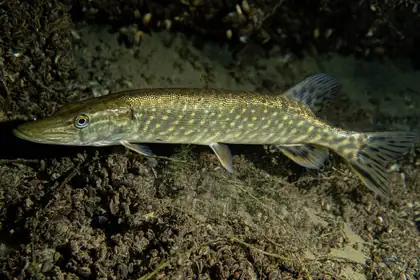
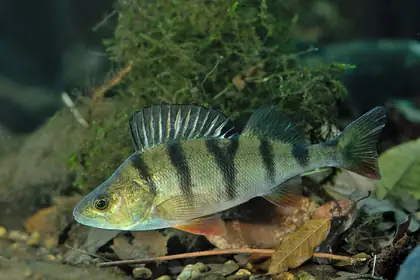
Slender, muscular body, with the proportions of a pike but the typical build of the perch family. The back is greenish-brown with dark vertical bands coming down from it, often blurred; the belly is creamy white. The first dorsal and tail fins are marked with regular rows of black dots, while the lower fins stay pale. Young fish are silvery and darken as they grow. Compared with the perch it is much more elongated, reaches far larger sizes and has no red fins.
Habitat and habits
It lives in large slow-flowing rivers, reservoirs, canals and nutrient-rich lakes, even in brackish water. It is at home where the water is a little turbid and vegetation sparse, because its eyes are suited to low light; it does, however, need well-oxygenated water. It stays close to the bottom, along slopes, boulders, piles and gravel bars, and hunts shoals of small fish. In spring the male digs a hollow on sand or gravel and guards the eggs.
Related species and forms
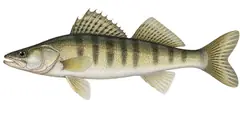
Volga Pikeperch
Sander volgensis
Close and smaller relative of the pikeperch, typical of the Danube and the Volga.
There's more in the app
This species' bite index, recommended baits and methods, and the rules of the day for every water. Offline too.
Soon on Android and iPhone