Description
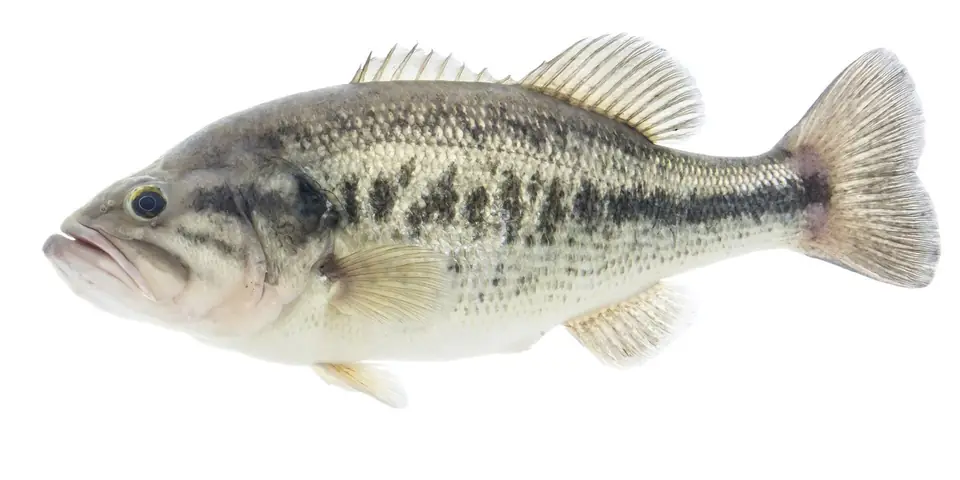
Introduced North American species.
How to identify it
Very large mouth reaching past the eye, dark lateral band, dorsal with a deep notch.
Appearance
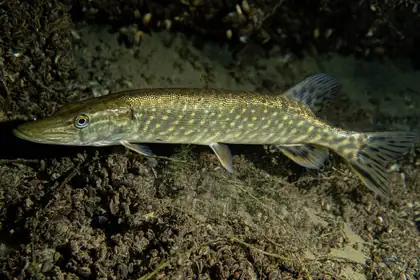
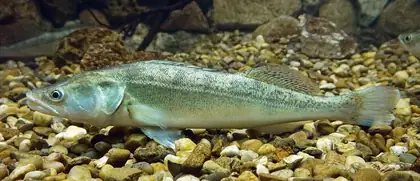
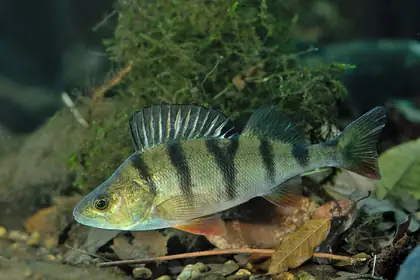
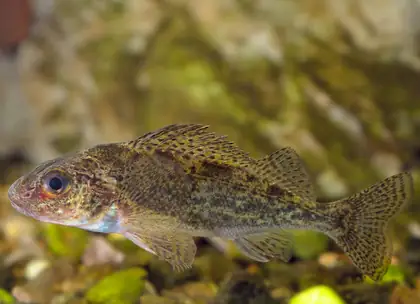
Sturdy, muscular body, olive green or grey-green, with a pale belly. Along the flanks a series of dark spots merges into an irregular horizontal band. The feature that gives it away is the enormous mouth: the upper jaw reaches beyond the rear edge of the eye and the lower jaw protrudes only slightly. The two dorsal fins are almost joined, separated only by a deep notch. It bears little resemblance to the perch: no vertical bands and no red fins. Females grow larger than males.
Habitat and habits
It is a North American species, introduced into many countries for sport fishing. Where it has established itself it lives in lakes, ponds, gravel pits, reservoirs and slow rivers with calm water rich in vegetation. It always looks for cover: reeds, water lilies, submerged weeds, branches and fallen trunks, under which it lies in ambush. It stays mostly in shallow water, while large adults drop a little deeper in wide reservoirs. It tolerates turbid water and urban settings. In spring the male digs and guards the nest.
There's more in the app
This species' bite index, recommended baits and methods, and the rules of the day for every water. Offline too.
Soon on Android and iPhone