Description
A predator found in lakes, rivers and ponds.
How to identify it
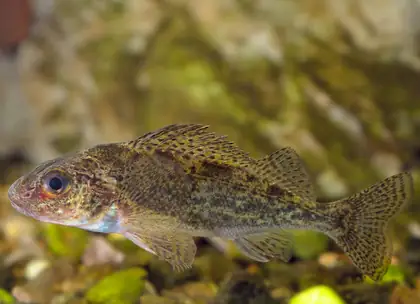
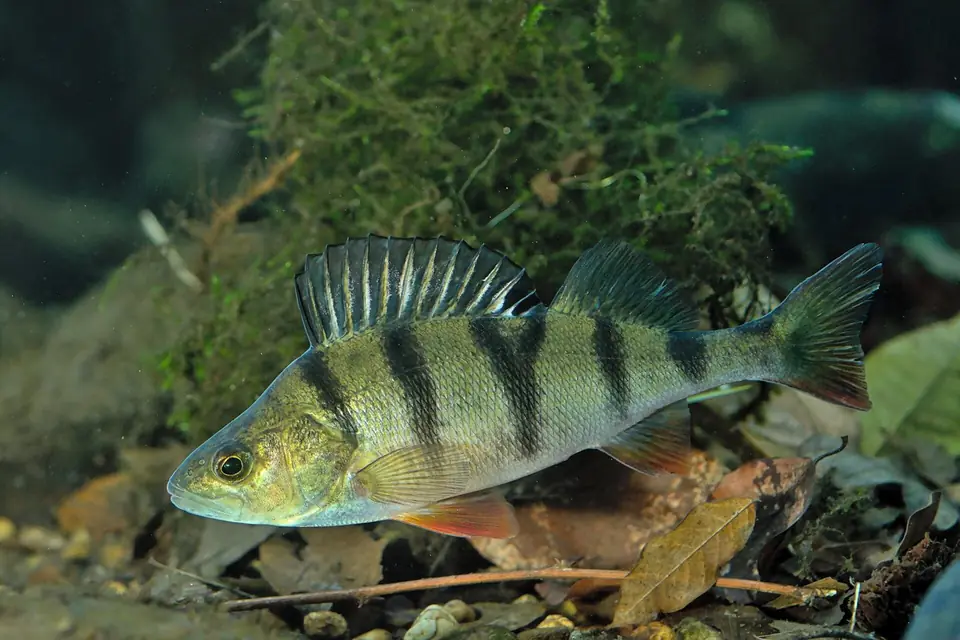
Dark vertical bars, two dorsal fins (the first with a black spot), pelvic and anal fins red-orange.
Appearance
Deep, compact body, dark green on the back and golden-green on the flanks, crossed by five to eight dark vertical bands that make it instantly recognisable. The lower fins and the tail turn red-orange. The first dorsal fin is armed with stiff spines and the gill cover ends in a sharp point, so it must be handled with caution. In old fish a pronounced hump forms between the head and the dorsal fin. Compared with the zander it is stockier and has no protruding canines.
Habitat and habits
It lives in calm water: slow rivers, lakes, ponds, gravel pits and reservoirs. It is most abundant in shallow, clear lakes, where light penetrates well, while it tends to avoid cold or fast water, in which it does not spawn anyway. It hunts by sight, so it is active by day. Young fish gather in large shoals near banks, jetties and vegetation. In spring it lays long ribbons of eggs on submerged plants and branches; in the cold it gathers in shoals at greater depths.
There's more in the app
This species' bite index, recommended baits and methods, and the rules of the day for every water. Offline too.
Soon on Android and iPhone