Description
An ambush predator that lives among the vegetation of lakes and rivers.
How to identify it
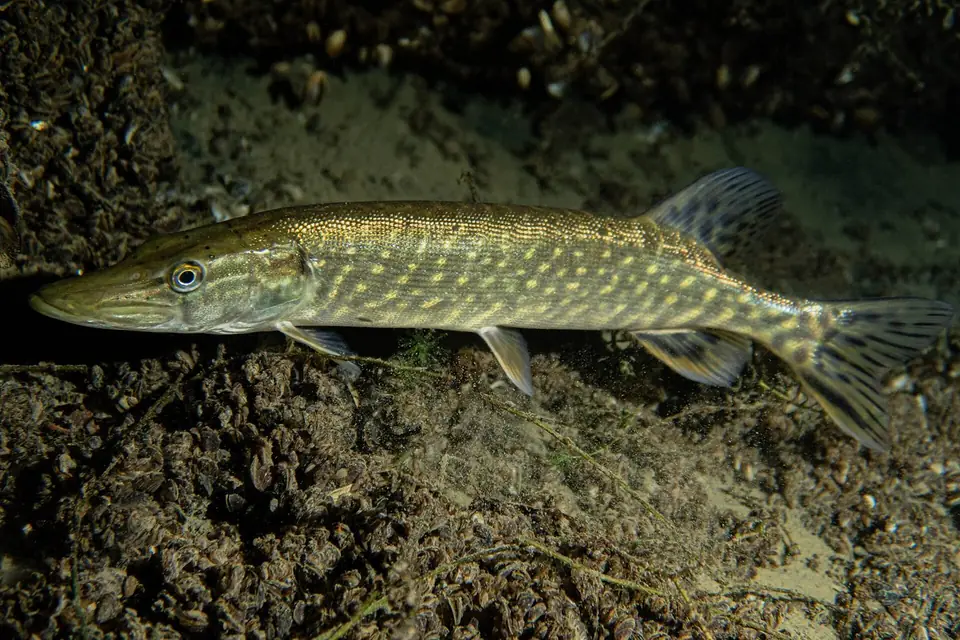
Duck-bill snout, many teeth, dorsal and anal fins set back towards the tail, green flanks with cream-coloured spots.
Appearance
Long, cylindrical body, almost torpedo-shaped, with an elongated head, a flattened snout and a lower jaw that protrudes beyond the upper. The ground colour is olive green, lightening towards a yellowish or white belly; along the flanks run rows of elongated pale spots, while the fins show dark dots and sometimes reddish tones. In young fish the pattern is made of yellow bands on a green ground. There is also a rare silvery form almost without spots.
Habitat and habits
It prefers slow water rich in submerged vegetation: oxbows, reedbeds, lakes, reservoirs and calm stretches of rivers, but it also adapts to cold, clear water with a rocky bed. Small pike stay in the thick of the plants to escape the big ones, which instead occupy more open, deeper areas and follow the shoals of prey fish. In spring it comes to the shallow, grassy banks to spawn; in summer large females look for deeper water. At night it is not very active.
There's more in the app
This species' bite index, recommended baits and methods, and the rules of the day for every water. Offline too.
Soon on Android and iPhone