Description
Small sturgeon of the Danube basin.
How to identify it
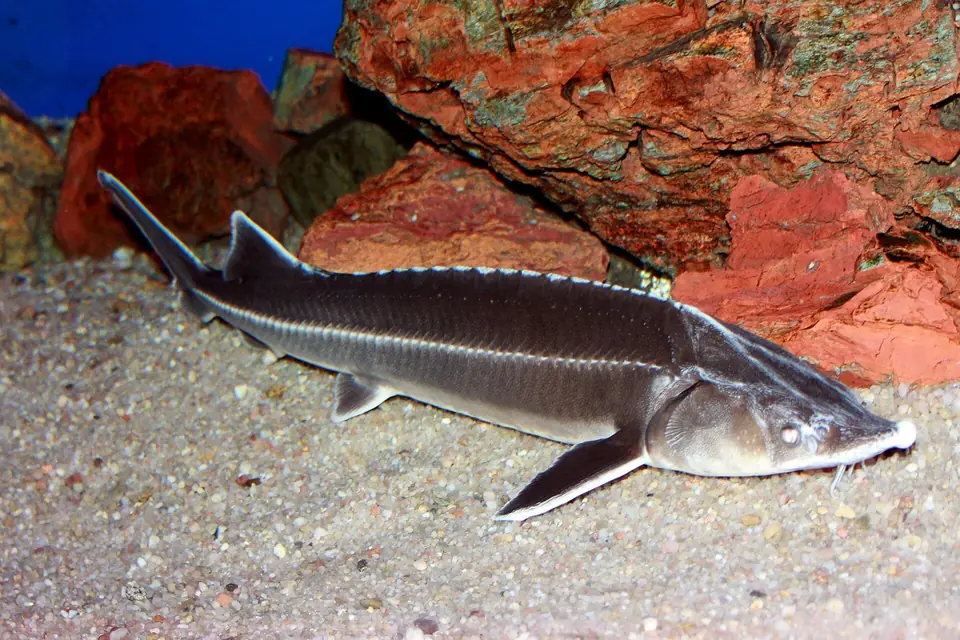
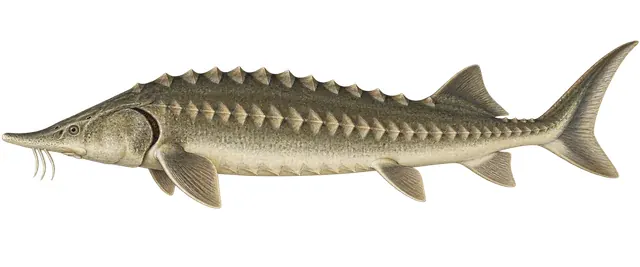
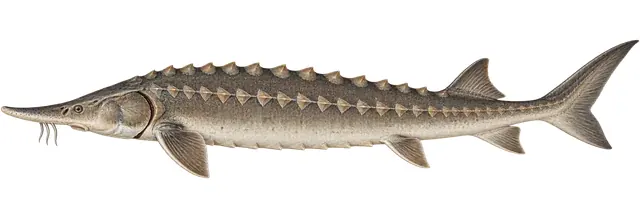
Long snout, four barbels, five rows of bony plates.
Appearance
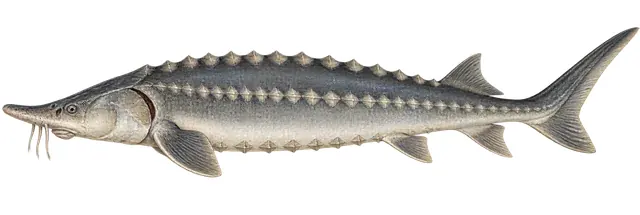
It is the smallest of the European sturgeons: it usually stays under 90 centimetres. Like all sturgeons it has a largely cartilaginous skeleton, scaleless skin protected by bony plates, a mouth under the snout and a tail with the upper lobe longer. It is recognised among other sturgeons by its narrow, elongated snout, whose length varies greatly between individuals, by its fringed barbels and by the numerous whitish lateral plates. The colour is variable, with a generally yellowish belly.
Habitat and habits
It lives in the large rivers of the Black Sea and Caspian basins and of some Siberian regions; in the middle and upper Danube it is the last remaining native sturgeon. It frequents deep stretches with current and searches the bottom for crustaceans, worms and insect larvae. It spawns between mid-April and early June, with water at around 12-17 degrees. Wild populations are in steep decline because of dams, pollution and overfishing; many of the fish you meet come from farms or fishing ponds.
Related species and forms
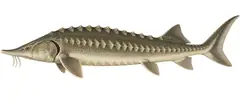
Common sturgeon
Acipenser sturio
Large anadromous sturgeon of the European coasts, now severely threatened, with a single breeding population remaining in the Garonne basin.
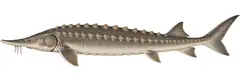
Atlantic sturgeon
Acipenser oxyrinchus
Large, long-lived anadromous sturgeon of the Atlantic coasts of North America, present in Europe with a Baltic population that has been re-established only through reintroductions.
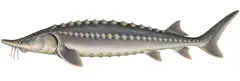
Beluga
Huso huso
The largest sturgeon, anadromous: it lives in the sea (Black Sea, Caspian, Azov) and ascends the large rivers to spawn.
There's more in the app
This species' bite index, recommended baits and methods, and the rules of the day for every water. Offline too.
Soon on Android and iPhone