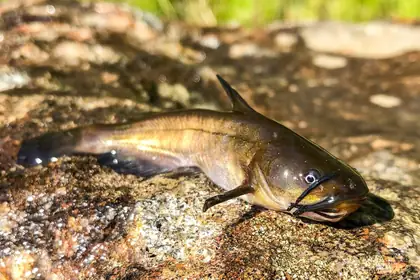
Weatherfish
Misgurnus fossilis
Description
Lives in the mud of still waters.
How to identify it
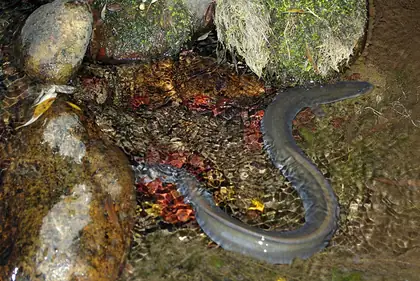
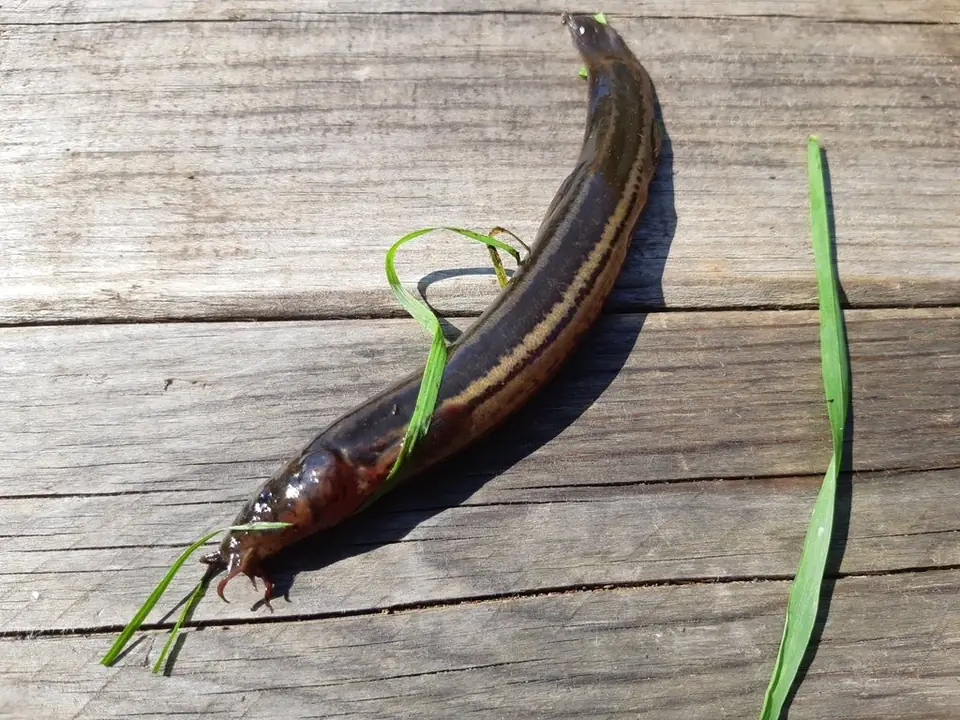
Elongated, eel-like body, ten barbels, dark longitudinal stripes.
Appearance
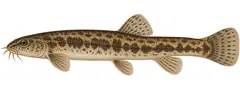
Long, slender, almost cylindrical body, similar to a small eel, built for burrowing and slipping through mud and plants. Around the small mouth it has a crown of sensitive barbels with which it feels the bottom for food. On the yellowish-brown ground colour run dark longitudinal stripes alternating with paler bands, while the belly is paler. The fins are small and rounded. Unlike the eel, the dorsal, tail and anal fins are clearly separate from one another.
Habitat and habits
It lives in still or very slow water, rich in plants and mud: ponds, oxbows, marshes, canals and ditches. Adults stay in the thick of the vegetation, young fish in very shallow water near the bank among the debris; it is not found in open, bare areas. It spends a lot of time buried in the bottom. It tolerates oxygen-poor water because it rises to the surface to gulp air, which it absorbs through the intestine. Dredging and the removal of aquatic vegetation destroy its habitat.
Related species and forms
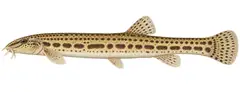
Danubian spined loach
Cobitis elongatoides
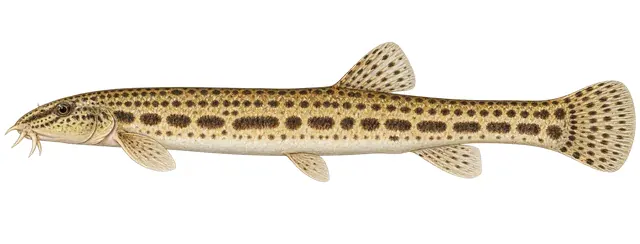
Small spined loach of sandy bottoms, in German Donau-Steinbeißer, a species of the Cobitis taenia complex.
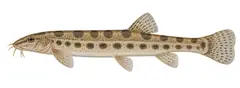
Balkan golden loach
Sabanejewia balcanica
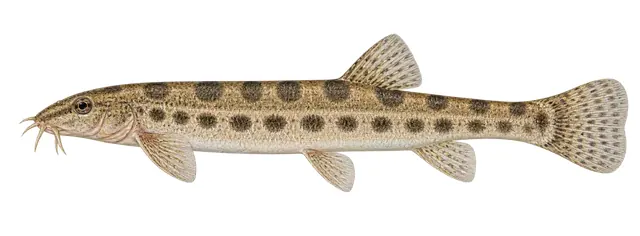
Small bottom-dwelling loach living in the Danube basin.
Stone Loach
Barbatula barbatula
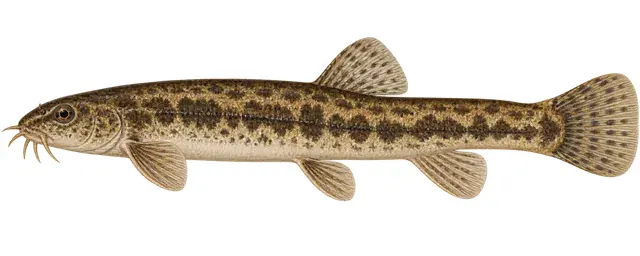
Small bottom-dwelling fish of streams and clear watercourses, in German Bachschmerle (also Schmerle, Bartgrundel).
There's more in the app
This species' bite index, recommended baits and methods, and the rules of the day for every water. Offline too.
Soon on Android and iPhone