Description
Large salmonid of the Danube basin, rare today.
How to identify it
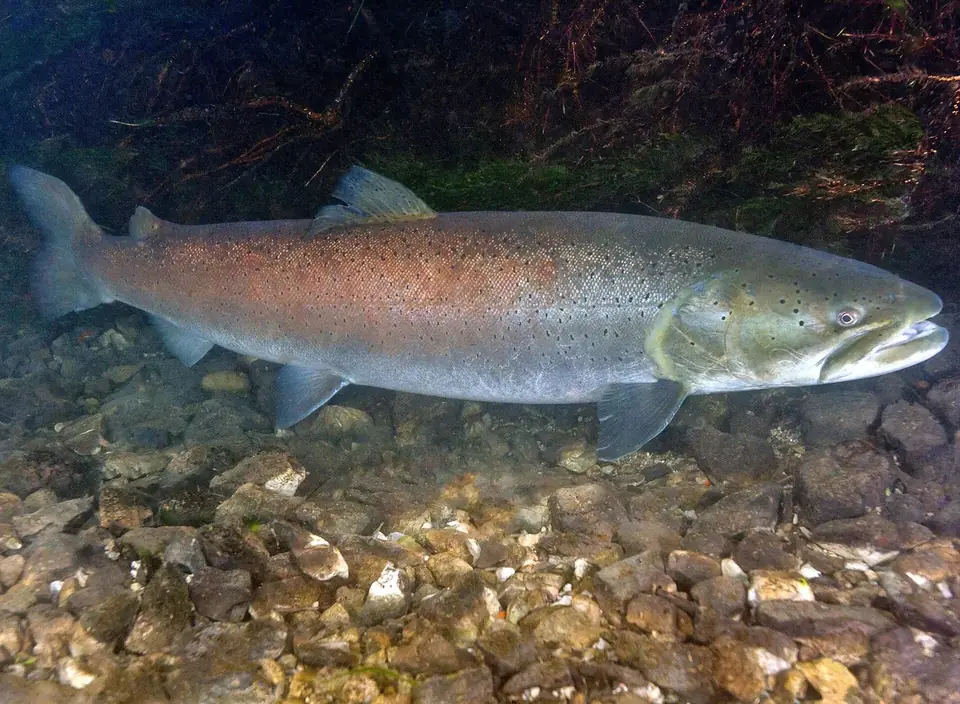
Torpedo-shaped body, long flat head, large mouth, reddish fins.
Appearance
It is the largest salmonid in European waters: it usually measures between 60 and 120 centimetres and exceptional specimens exceed a metre and a half. The body is long and almost cylindrical in cross-section, very different from the laterally compressed body of a trout. The reddish-brown back carries dark X-shaped or crescent-shaped spots, with no red dots. The head is longer and wider than in any other salmonid, with a large, elongated mouth.
Habitat and habits
It is native only to the Danube basin. It inhabits large and medium-sized foothill rivers with cold, well-oxygenated water, alternating currents and deep pools, and a bed of gravel and boulders. Adults lie in wait at depth and hunt fish such as nase, chub, barbel and trout. In April, when the water reaches around 6-9 degrees, it moves up small, shallow tributaries to spawn on gravel. Dams that interrupt the river have made it vanish from many stretches: today it is rare and sustained by restocking.
There's more in the app
This species' bite index, recommended baits and methods, and the rules of the day for every water. Offline too.
Soon on Android and iPhone