Description
Introduced North American species.
How to identify it
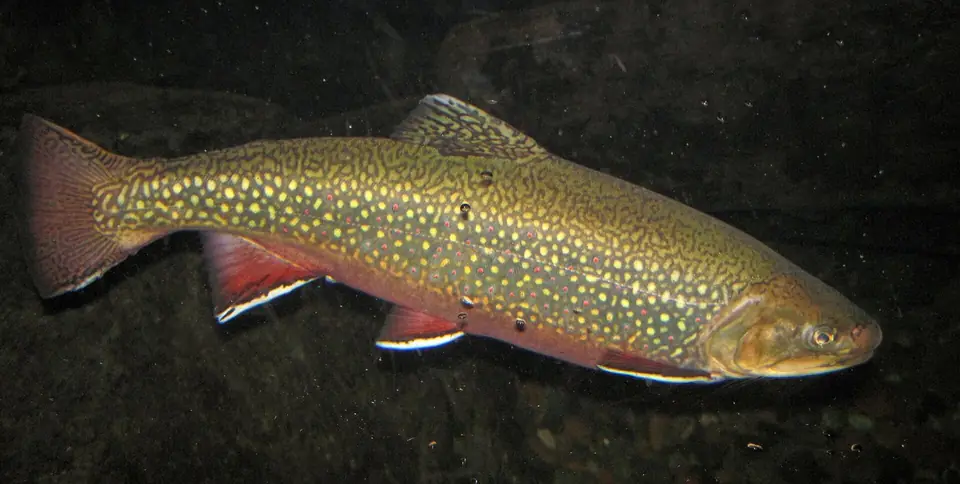
Pale marbling on the back, red spots with a blue halo, white edge on the lower fins.
Appearance
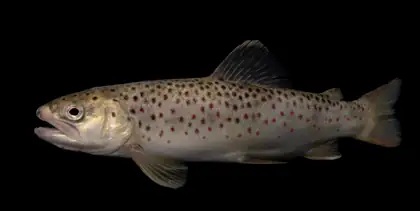
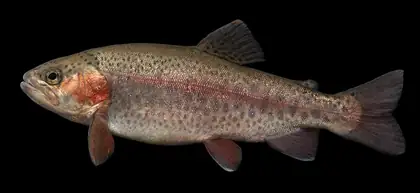
It is a char, not a true trout. The olive-green or brown back is covered by a pale, vermiculated pattern that reaches the dorsal fin and often the tail; the rest of the body is scattered with yellow dots and small red spots ringed with blue. The belly and lower fins are reddish or orange, with a white leading edge followed by a black stripe. The tail is almost straight. In the breeding season the males turn a very bright orange-red on the belly.
Habitat and habits
Native to eastern North America, in Europe it has been stocked in mountain streams, high-altitude lakes and small cold reservoirs. It looks for clear, cool water, preferably spring-fed, with moderate current and good cover such as boulders, sunken wood and overhanging banks. It tolerates slightly acidic water better than many other trout, but suffers in hot summers with low flows, when it concentrates in the coolest spots. It spawns in autumn on gravel fed by groundwater.
Related species and forms
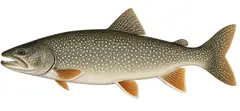
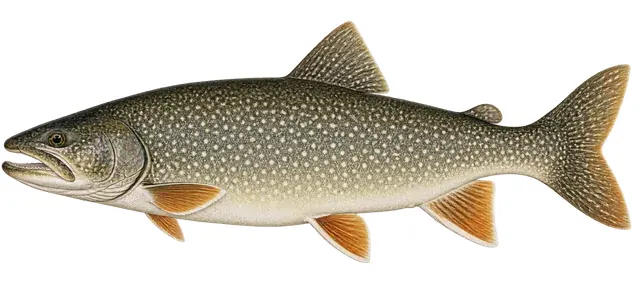
Lake trout (namaycush)
Salvelinus namaycush
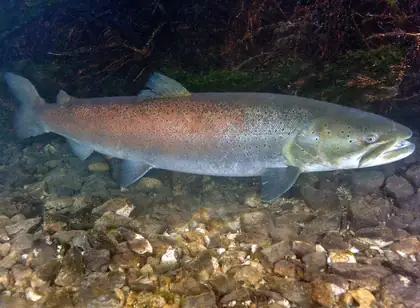
Large North American char of cold, deep lakes, also called American lake trout.
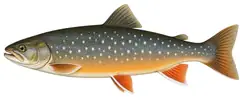
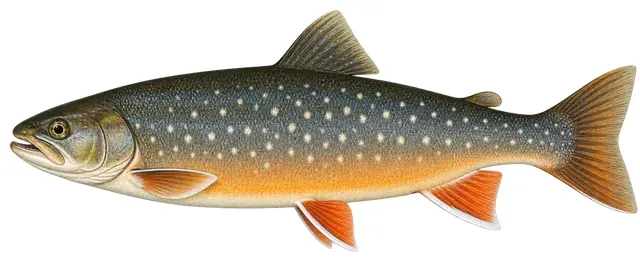
Arctic char (alpine form)
Salvelinus umbla
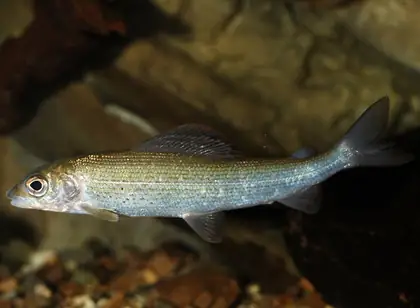
Cold-water salmonid that lives in the deep lakes of the Alpine and pre-Alpine arc and is now considered a species distinct from the Arctic char.
There's more in the app
This species' bite index, recommended baits and methods, and the rules of the day for every water. Offline too.
Soon on Android and iPhone