Description
Lives in slow rivers and lakes.
How to identify it
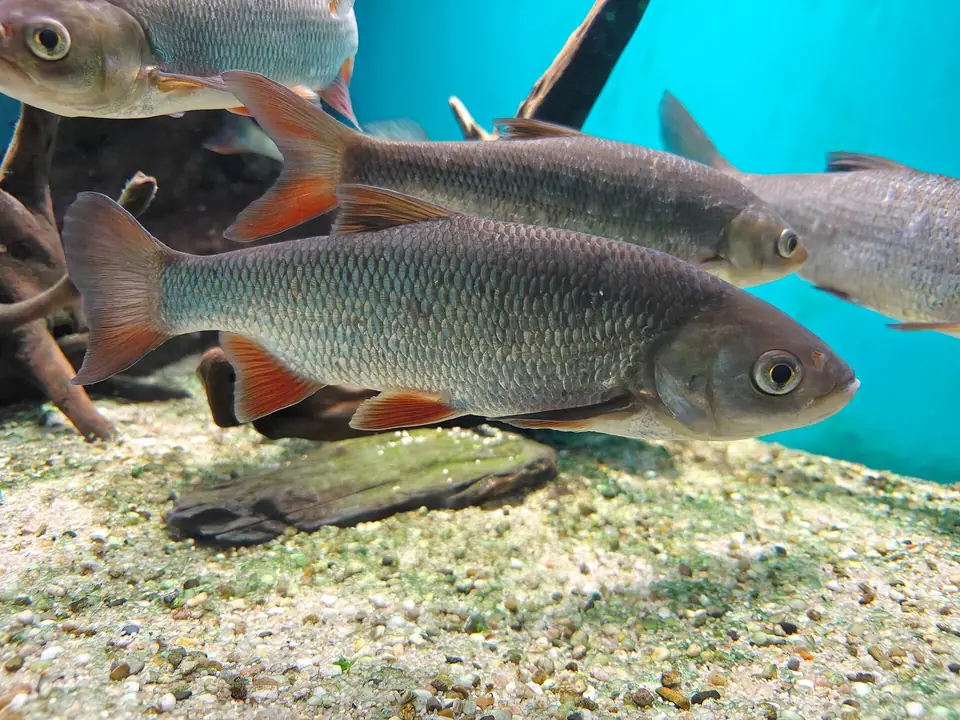
Deeper-bodied than the chub, small head, pelvic and anal fins reddish.
Appearance
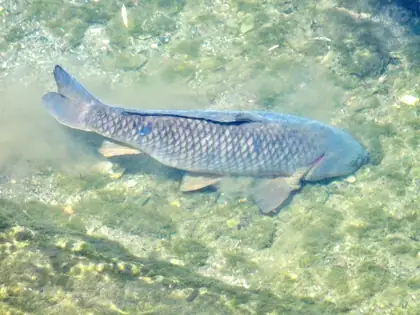
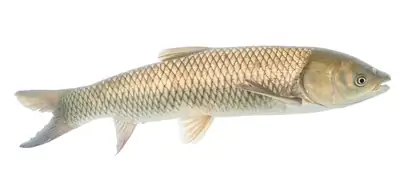
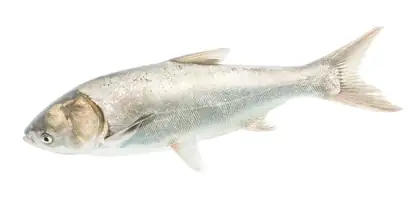
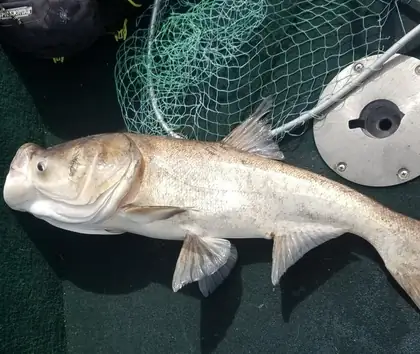
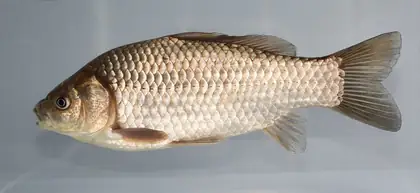
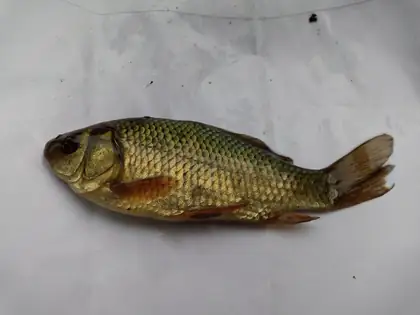
Full, deep body, well compressed at the sides, with a thick caudal peduncle, small head and terminal mouth. When young it has a dark back and silvery flanks; as it grows it takes on a golden sheen along the flanks. The eye is yellow at every age, while the pectoral and anal fins are reddish. Compared with the chub it has smaller, more numerous scales and an anal fin with a concave edge. In ornamental ponds a golden or orange variety is common, which sometimes ends up in the wild.
Habitat and habits
It lives in shoals in medium and large rivers, lakes and ponds, preferring clear, warm water; it tolerates water too rich in nutrients less well than other cyprinids. It haunts places where the current slows: seams of the current, tributary mouths, pools, bridge piers and banks with overhanging trees. In winter it moves to deeper water; in spring it runs up into shallow water with current to spawn. Young fish stay near the bank, adults in small groups that follow habitual routes.
There's more in the app
This species' bite index, recommended baits and methods, and the rules of the day for every water. Offline too.
Soon on Android and iPhone