Description
Introduced Asian species, feeds mainly on aquatic vegetation.
How to identify it
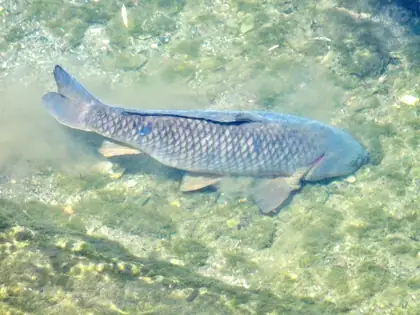
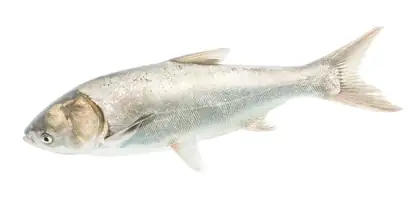
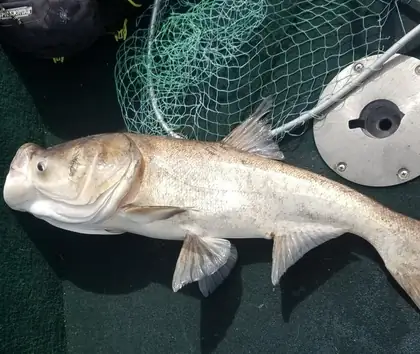
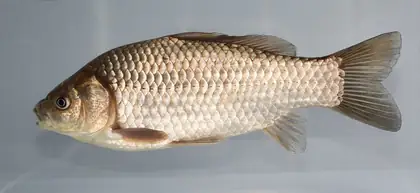
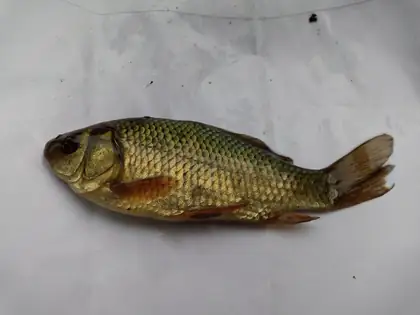
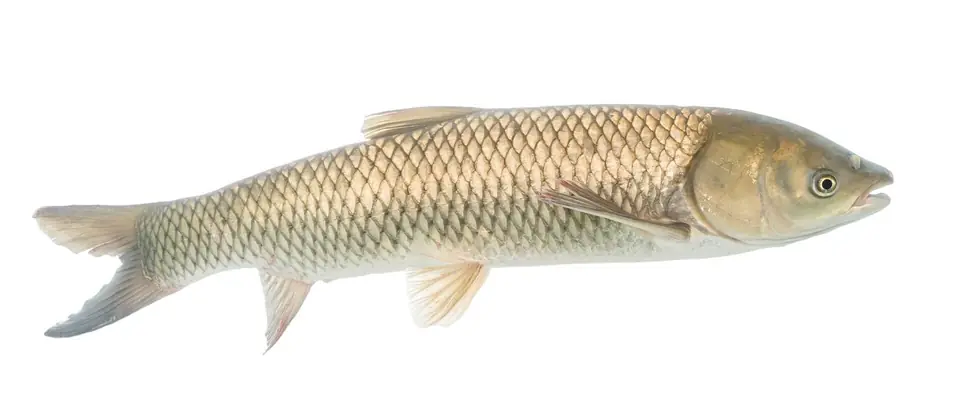
Elongated, almost cylindrical body, wide head, terminal mouth without barbels, large scales with a dark edge.
Appearance
It has the outline of a large scaly torpedo, with the top of the head wide and flat. The back is dark olive green, the flanks fade to a yellow-brown with golden reflections and the belly is whitish. The dark edge of the scales draws a clearly visible regular net pattern on the body. The dorsal fin is short and tall, completely different from the long one of the common carp, and the anal fin is set near the tail. The lips are thin and hard, not fleshy.
Habitat and habits
Native to the large rivers of East Asia, in Europe it lives mainly in ponds, lakes, reservoirs and oxbows with slow or still water and plenty of submerged vegetation, which it eats in large quantities. It moves in groups and spends a lot of time near reedbeds and weed beds; on hot days it often swims just under the surface. It is most active in warm water. To spawn it needs long rivers with current, so in most waters populations depend on stocking.
There's more in the app
This species' bite index, recommended baits and methods, and the rules of the day for every water. Offline too.
Soon on Android and iPhone