Description
Lives in ponds and still waters with plenty of vegetation.
How to identify it
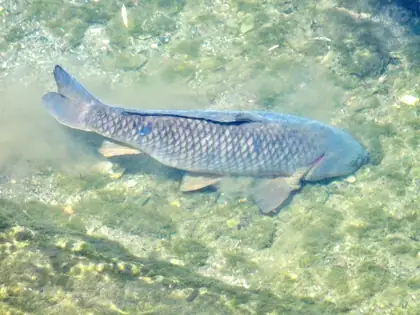
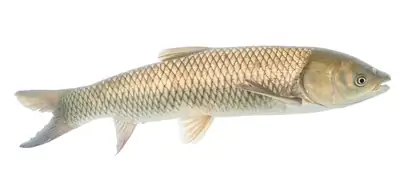
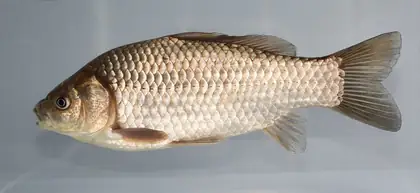
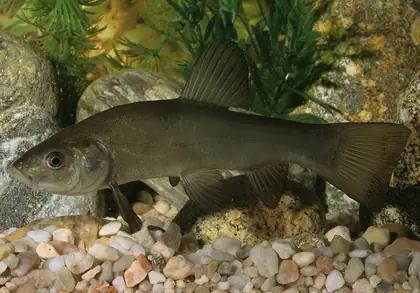
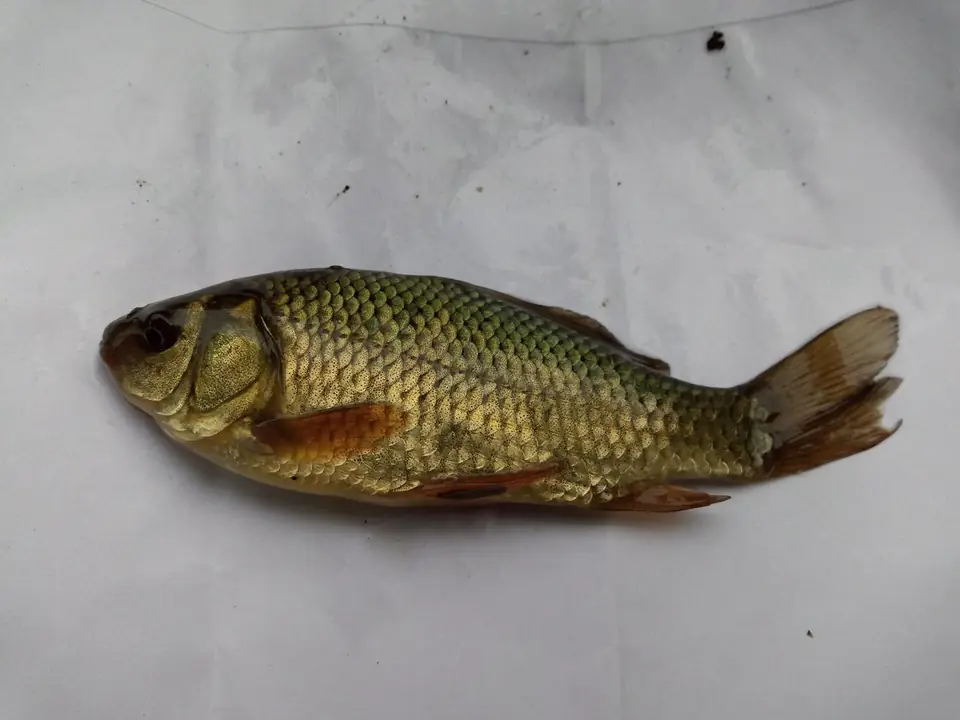
No barbels, deep, stocky body, convex dorsal, golden-bronze colour.
Appearance
Stockier and deeper than the Prussian carp, with a strongly arched back and a body flattened at the sides. Young fish are bronze-gold; with age the back darkens towards green, the flanks turn deep bronze and the lower part stays golden, while the fins tend towards red or orange. The edge of the dorsal fin bulges outwards, whereas in goldfish hybrids and in the Prussian carp it is concave. It has smaller, more numerous scales than its silver relative.
Habitat and habits
It lives in ponds, small lakes, marshes, oxbows and slow waters rich in plants, often small and isolated. It is famous for its hardiness: under the ice it can survive for weeks in water almost devoid of oxygen, an extremely rare ability among vertebrates. Where there are predatory fish it develops an even deeper body, hard to swallow. It stays near the bottom and among vegetation and is most active in the warm months. Crossing with the goldfish is considered a threat to pure populations.
There's more in the app
This species' bite index, recommended baits and methods, and the rules of the day for every water. Offline too.
Soon on Android and iPhone