Description
Very adaptable, lives in still waters and slow rivers.
How to identify it
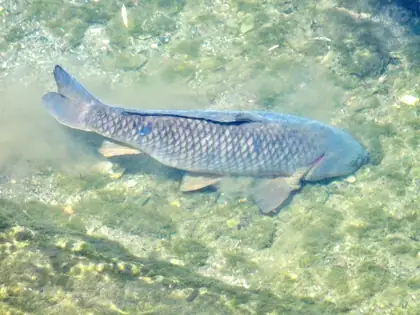
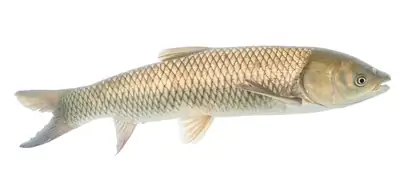
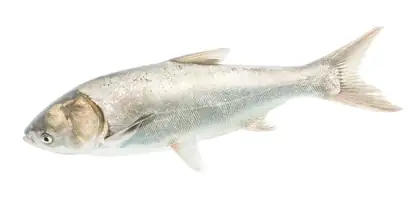
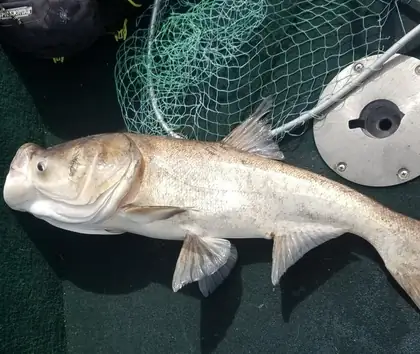
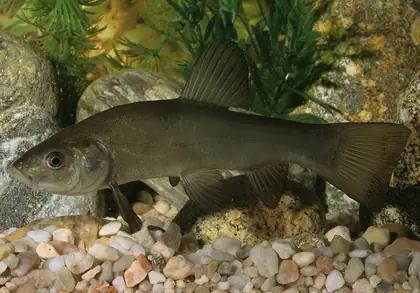
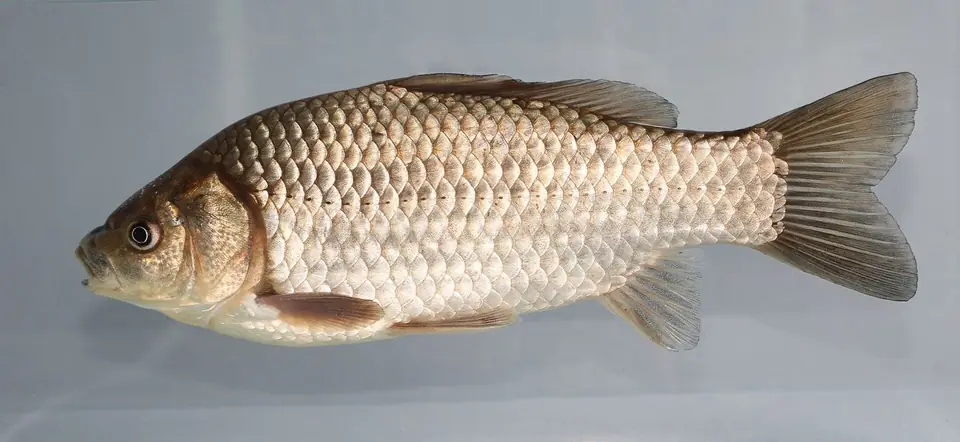
No barbels, long dorsal with a serrated ray, grey-silver body.
Appearance
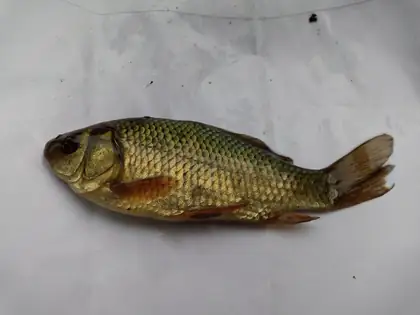
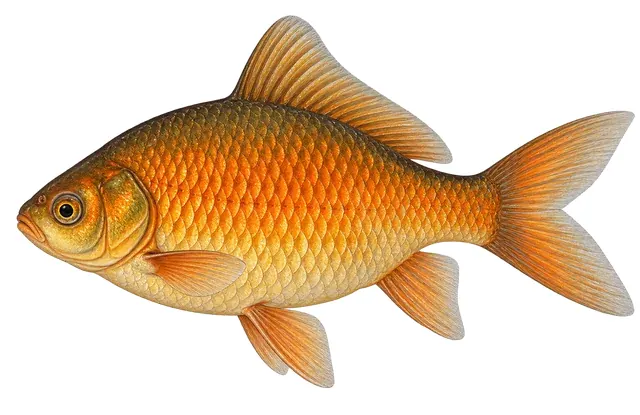
Deep, sturdy body, silver in colour, sometimes with a slight golden or grey-green tinge. It is easily confused with the crucian carp, but has larger scales and therefore fewer along the lateral line, a silver rather than burnished bronze colour and a more deeply forked tail. The profile of the dorsal fin also helps: in the Prussian carp the edge is straight or slightly concave, in the crucian carp it bulges outwards.
Habitat and habits
It is one of the most adaptable fish: it populates ponds, lakes, canals, pools, gravel pits and slow stretches of rivers, preferably with a muddy bottom and dense vegetation. It tolerates warm, cloudy, low-oxygen water better than many other species and even turns up in isolated bodies of water. It forms large shoals and multiplies quickly, to the point of becoming the dominant species in many waters. It feeds on the bottom and among plants, eating plankton, small invertebrates, plants and detritus; in the cold it slows down and stays on the bottom.
Related species and forms
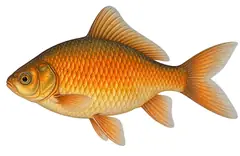
Goldfish
Carassius auratus
Cyprinid of Asian origin, domesticated in China for centuries and widespread as an ornamental fish.
There's more in the app
This species' bite index, recommended baits and methods, and the rules of the day for every water. Offline too.
Soon on Android and iPhone