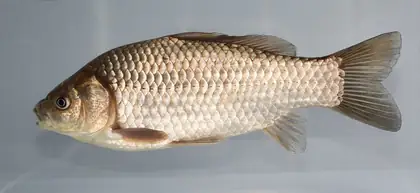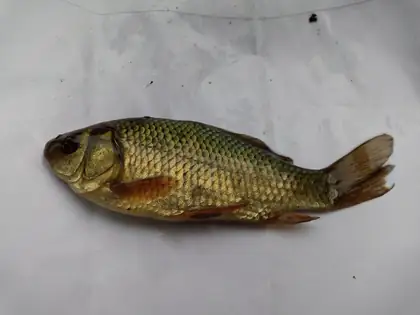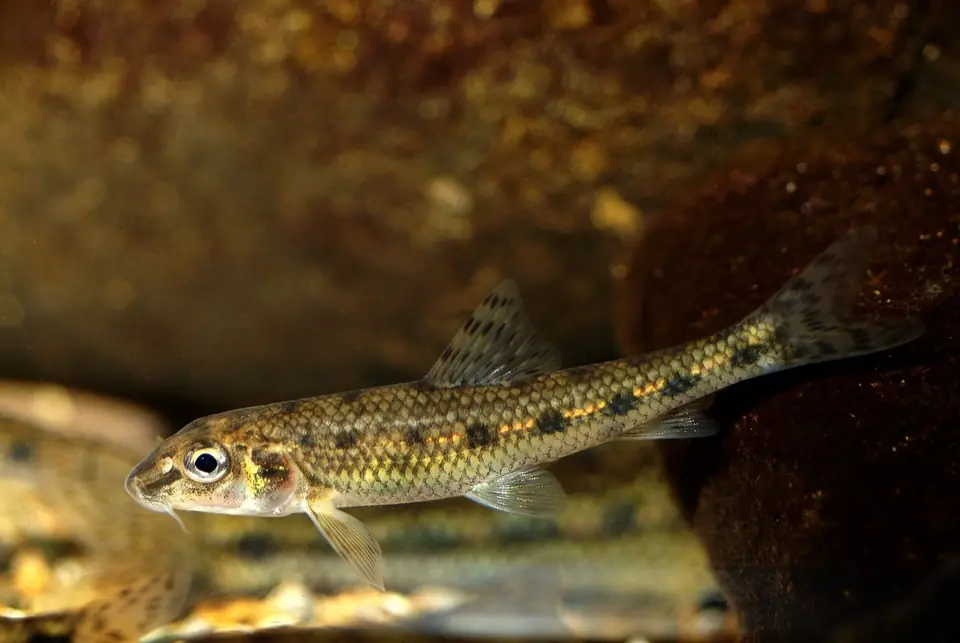
Description
Lives on the bottom of rivers and lakes.
How to identify it
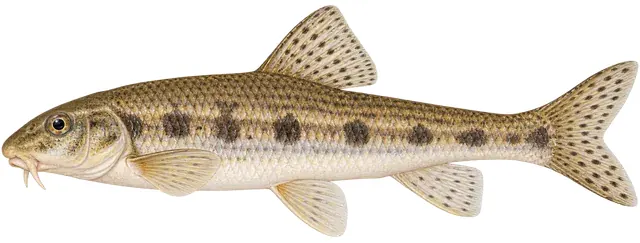
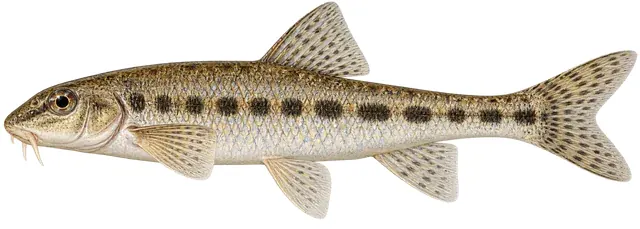
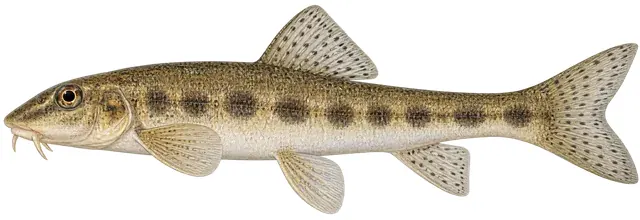
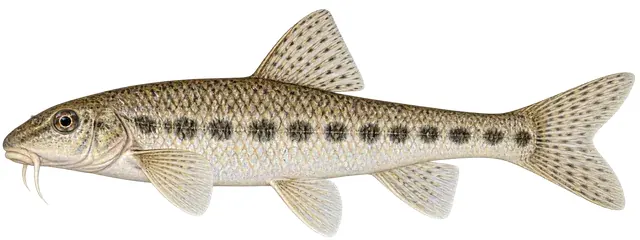
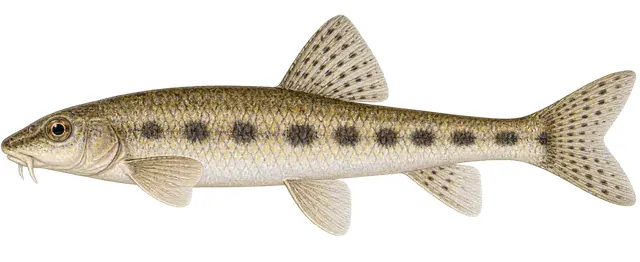
Small, one barbel on each side of the mouth, dark spots along the flank.
Appearance
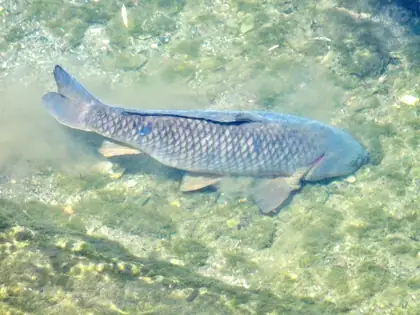
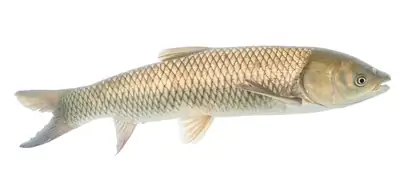
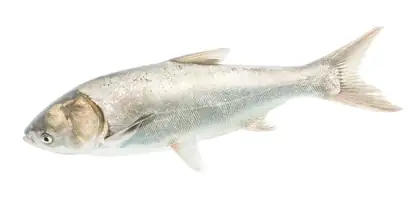
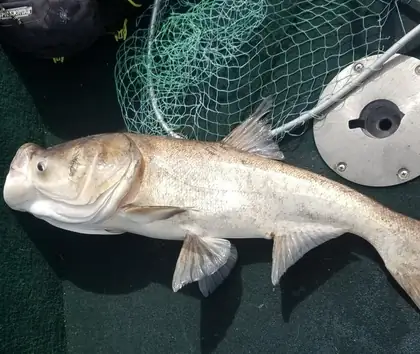
A small fish with a long, cylindrical body, a broad, flattened head, a blunt snout and a lower jaw shorter than the upper. The scales are large for its size. The back is greenish-brown, the flanks silvery with a row of soft dark blotches, the belly white; the dorsal and tail fins are light brown dotted with dark spots. Unlike the young barbel, which has four barbels, it has only two, one at each corner of the mouth. It rarely exceeds 15 cm.
Habitat and habits
It lives in rivers, streams and lakes of every size, as long as the bed is sandy or gravelly and the water fairly clear. It moves in shoals resting on the bottom, where it looks for worms, insect larvae, small molluscs and eggs. It is active by day; at night it stays still on the substrate. In spring and summer it frequents riffles and shallows, in winter it drops into deeper spots. It spawns from April to August in shallow water over stones. It is a regular prey of otters and kingfishers.
Related species and forms
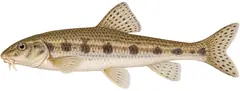
Danubian gudgeon
Gobio obtusirostris
Small bottom-dwelling gudgeon of the Danube basin, regarded by some as a species in its own right (G.
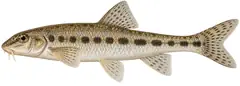
Kessler's Gudgeon
Romanogobio kesslerii
Small bottom-dwelling gudgeon of rivers of the Danube basin, Kesslergründling in German.
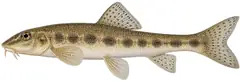
Danube Gudgeon
Romanogobio uranoscopus
Rare gudgeon of the Danube basin, Steingreßling in German, recognisable by its very long barbels.
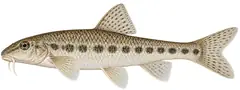
Danube whitefin gudgeon
Romanogobio vladykovi
Small pale-finned gudgeon of the Danube, Weißflossengründling in German.
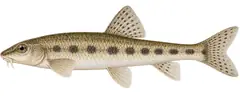
Northern whitefin gudgeon
Romanogobio belingi
Small freshwater cyprinid of the gudgeon group.
There's more in the app
This species' bite index, recommended baits and methods, and the rules of the day for every water. Offline too.
Soon on Android and iPhone