Description
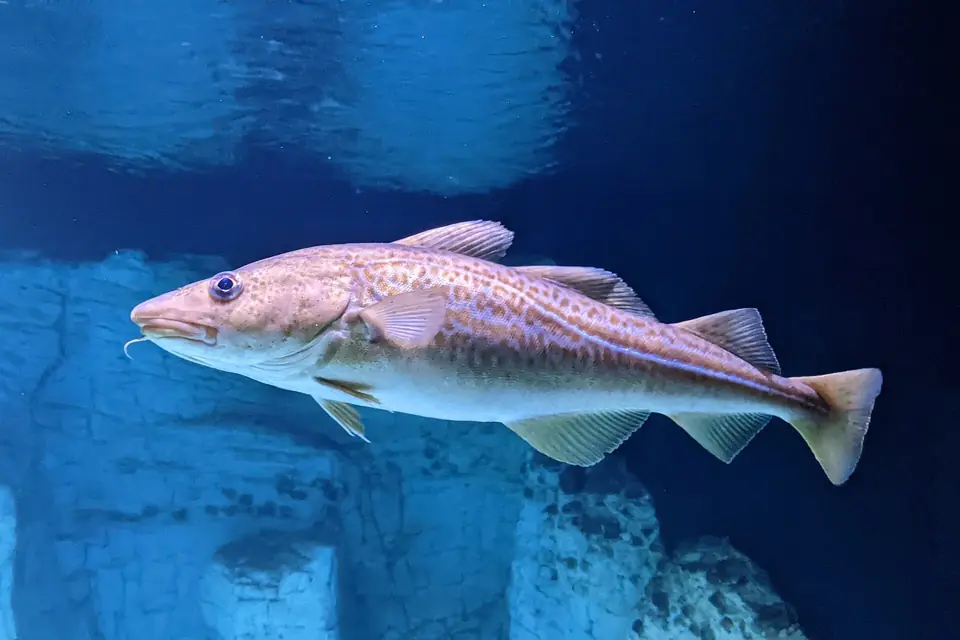
Large marine fish of the North Atlantic, also present in coastal and brackish waters such as the Baltic Sea. It is a schooling predator.
How to identify it
Stout barbel on the chin and projecting upper jaw. It has three dorsal fins and two anal fins; the lateral line is pale and forms a high arch above the pectoral fins.
Appearance
Variable colour: marbled grey, sandy brown or greenish on back and flanks, belly pale or silvery; reddish individuals also occur. Green or red among algae, more often grey over sand or at depth.
Habitat and habits
Marine species; lives in coastal and shelf seas and in brackish waters of the Baltic, where there is an eastern population adapted to low salinity.
Where it lives
North Atlantic: on European coasts from the Bay of Biscay to the Arctic Ocean, including the North Sea and the Baltic Sea.
Conservation status
IUCN: Vulnerable (VU) in the 1996 global assessment; the 2013 European assessment indicates Least Concern. The eastern Baltic population is greatly reduced.
There's more in the app
This species' bite index, recommended baits and methods, and the rules of the day for every water. Offline too.
Soon on Android and iPhone