Description
A fish of rivers with current and a gravel bottom.
How to identify it
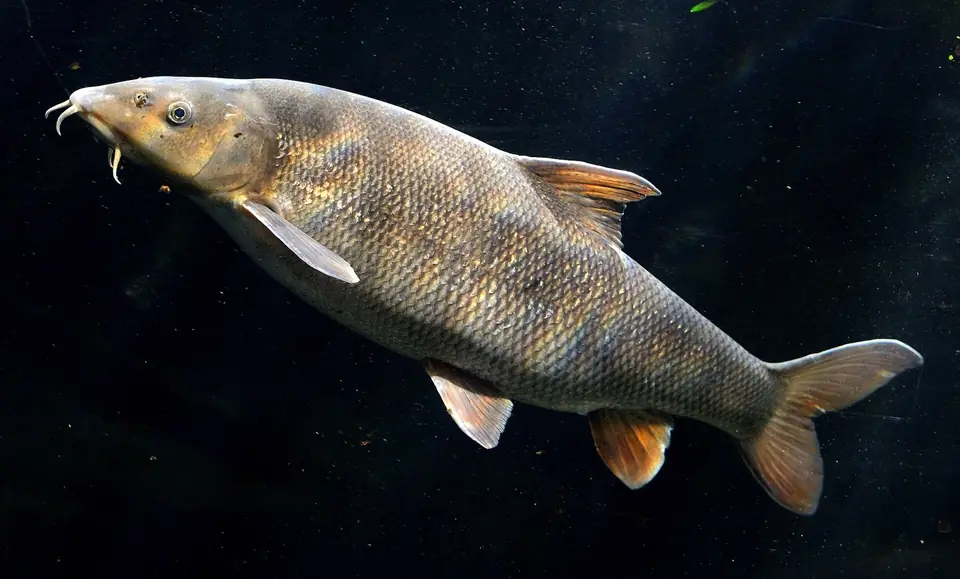
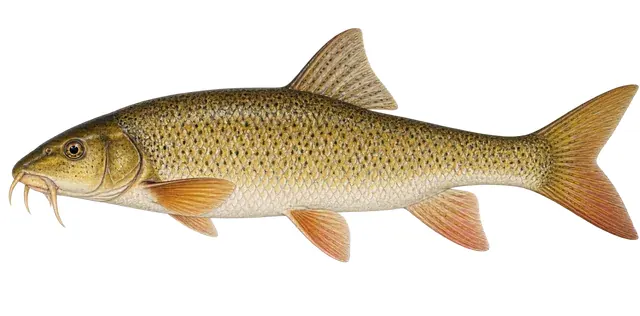
Four barbels, inferior mouth with fleshy lips, serrated ray in the dorsal.
Appearance
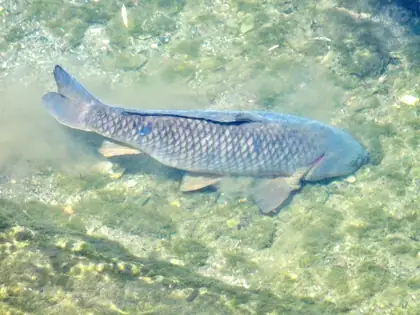
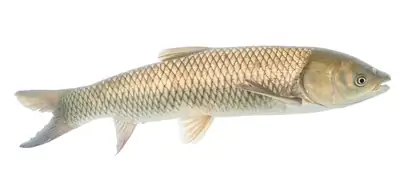
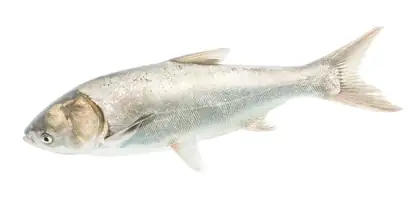
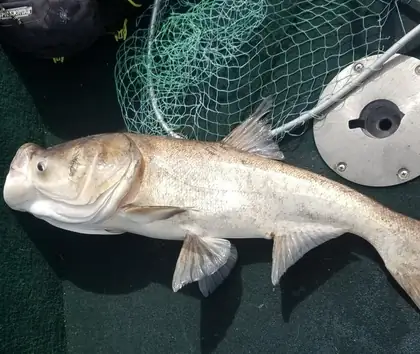
Long, tapered body, with a flat belly, sloping forehead and pectoral fins held horizontally: a shape designed to stay glued to the bottom even in strong current. Adults are dark brown, bronze or grey with a pale belly and fins tinged red or orange, while the young are grey and marbled. The tail has unequal lobes: the lower one is shorter and rounded, the upper one pointed. The barbels and the downward-facing mouth set it apart at once from chub and id.
Habitat and habits
It is the typical fish of rivers with fast current and a gravel or stony bottom, so much so that it gives its name to the barbel zone. It is also found in slower rivers and, if stocked, in still waters. It lives near the bottom, often in shoals, and makes use of deep pools, sunken branches, undercut banks and snags. It feeds mainly at night; by day it feeds in the deeper water or in the shelter of snags. It moves a lot along the river and in spring runs upstream to the gravel where it spawns.
Related species and forms
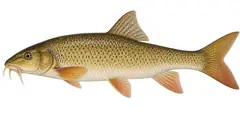
Large-spot Barbel
Barbus balcanicus
Small stream barbel of the Barbus petenyi group, in German Semling (also Hundsbarbe).
There's more in the app
This species' bite index, recommended baits and methods, and the rules of the day for every water. Offline too.
Soon on Android and iPhone