Description
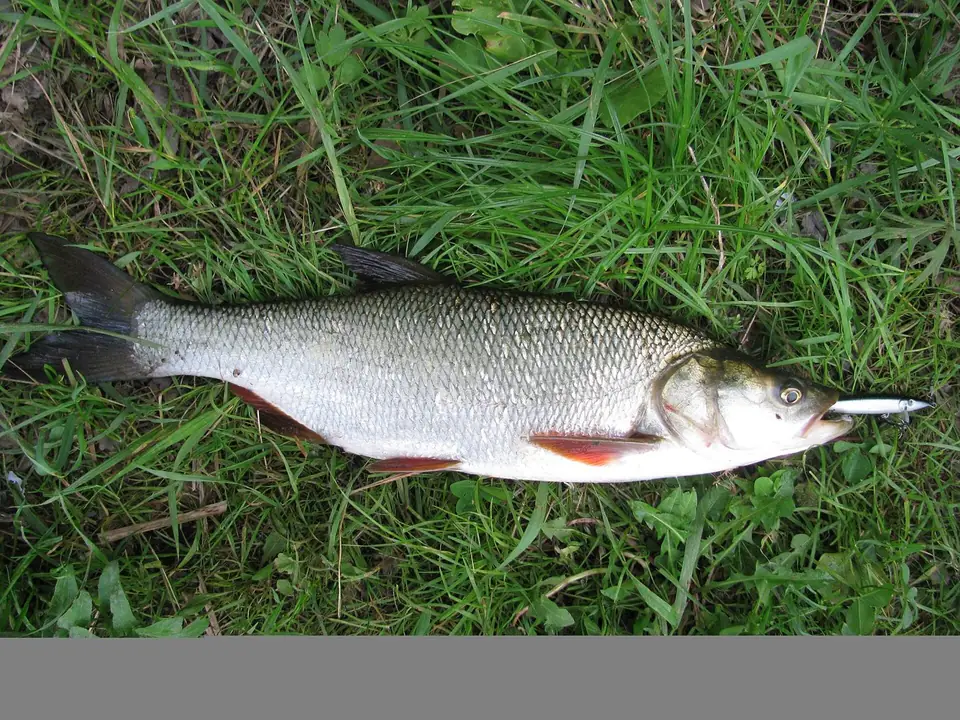
A predatory cyprinid of rivers and large lakes, hunts at the surface.
How to identify it
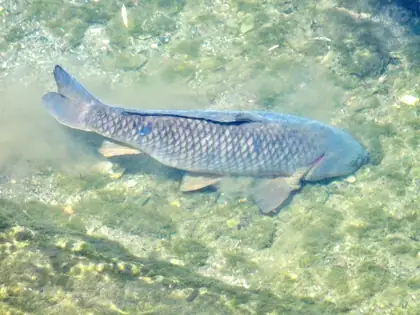
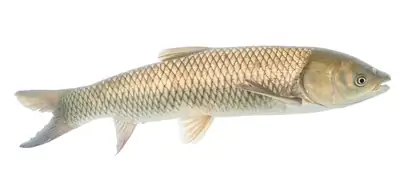
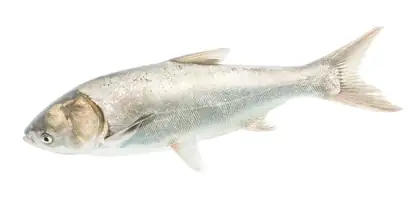
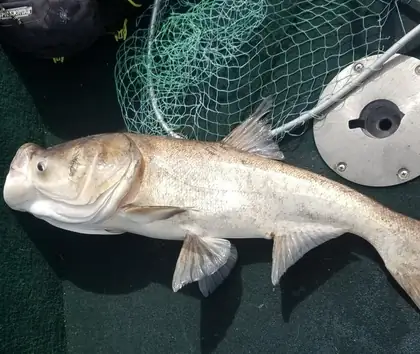
Streamlined body, large oblique mouth with a prominent lower jaw, blue-grey back.
Appearance
Long, laterally compressed, muscular body, with an elongated head and pointed snout. The mouth is very wide: the jaw reaches past the front edge of the eye and the lower jaw juts forward, a detail that at once sets it apart from chub, id and zarte. Between the pelvic fins and the anal fin runs a keel covered in scales. The back is green with silver and blue reflections, the flanks paler, the belly silver-white; pectoral, pelvic and anal fins tend towards grey-brown.
Habitat and habits
It inhabits large lowland rivers and connected lakes, including impoundments. It is one of the few predatory cyprinids: it hunts by day in the upper layers, mostly bleak and other small shoaling fish. Young fish live in groups, adults are solitary or hunt in small groups. It favours the current below weirs and locks, riffles, confluences and channels between islands. In winter it retreats to deep pools and moves little; in spring it spawns on gravel or among submerged vegetation.
There's more in the app
This species' bite index, recommended baits and methods, and the rules of the day for every water. Offline too.
Soon on Android and iPhone