Description
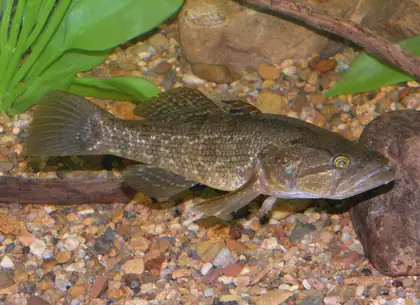
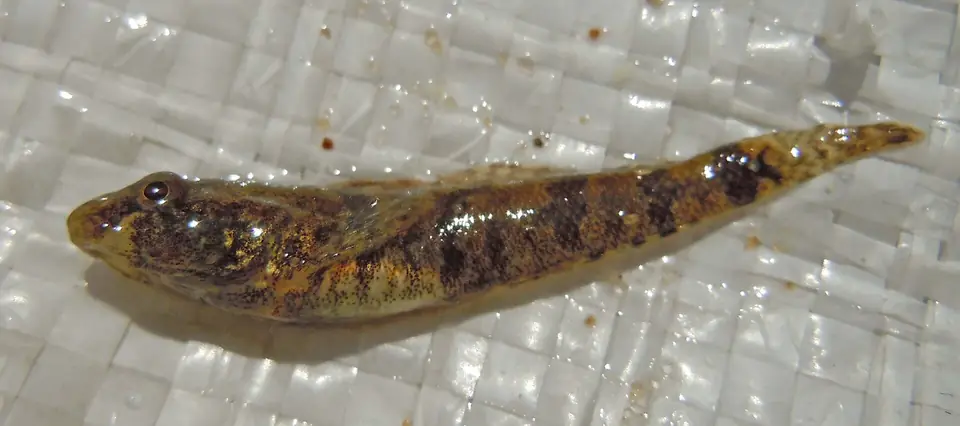
Small bottom-dwelling goby with tube-shaped nostrils, Marmorgrundel in German. It was formerly considered a synonym of P. marmoratus, a name that still appears in Austrian lists. In the Danube and Lake Neusiedl it is expanding upstream as far as Upper Austria.
How to identify it
It is distinguished from the round goby and other gobies by the tube extending the nostrils, about 1 mm long in Austria. Only the nape and the upper part of the operculum are scaled, and it has two dorsal fins. The pelvic fins form a sucker.
Appearance
Cylindrical body with a flattened belly, lacking a swim bladder. Yellowish-brown back with dark spots and a cream or white belly. The pelvic fins are fused into a sucker. The male guards the nest.
Habitat and habits
Bottom fish of shallow (less than about 5 m), slow-flowing waters rich in vegetation, with many hiding places. It tolerates very low oxygen levels. The male defends the nest under stones or logs.
Where it lives
Native to the Black Sea basin and part of the Aegean, in the Danube from the delta to the Morava; it has since moved up the Danube as far as Upper Austria. It is invasive in North America and in parts of central-western Europe.
Can be confused with
Round goby (Neogobius melanostomus) and other Ponto-Caspian gobies: the tubenose goby has tube-like nostrils and only the nape and operculum scaled.
There's more in the app
This species' bite index, recommended baits and methods, and the rules of the day for every water. Offline too.
Soon on Android and iPhone