Description
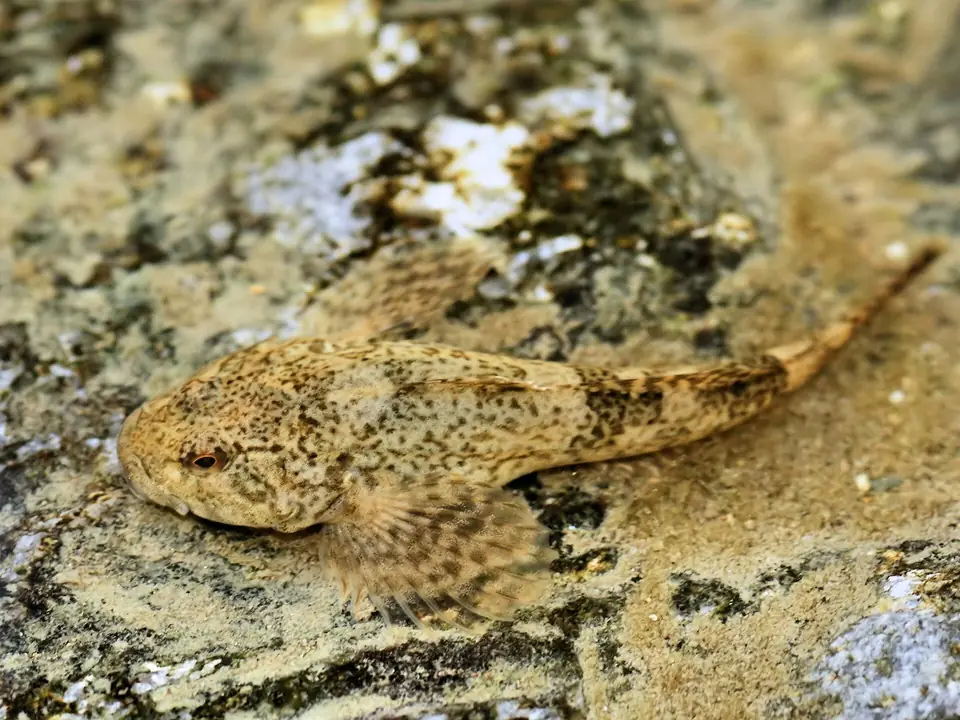
Small bottom-dwelling fish of cold, clean streams, called Koppe, Groppe or Mühlkoppe in Austria. It is a good indicator of clean, well-oxygenated water. Fish of the Year in Austria in 2006.
How to identify it
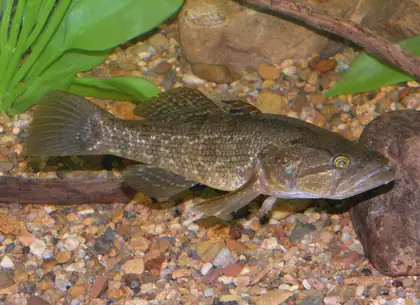
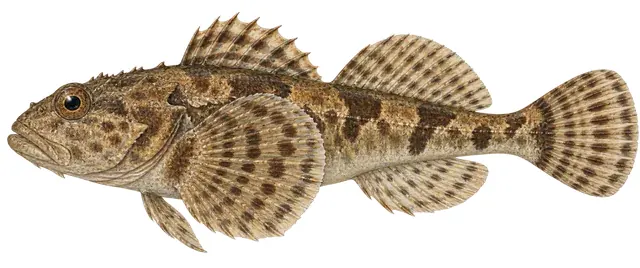
Broad, flattened head, large mouth with thick lips, very well-developed pectoral fins, scaleless body. Pelvic fins separate, unlike gobies (e.g. the monkey goby), which have them fused into a sucker.
Appearance
Spindle-shaped body, large and broad head (more so in males), naked skin and camouflage brown-marbled colours. No swim bladder. It swims poorly and stays on the bottom, among stones.
Habitat and habits
Trout and grayling zone of streams, up to over 2000 m, and cold lakes. It requires cold, clean, oxygen-rich water and a stony bottom. Active at night; even small weirs block it.
Where it lives
Much of continental Europe, absent from Mediterranean regions and northern Scandinavia. In Italy in the north and part of the Apennines. Present throughout Austria in suitable waters; the C. gobio complex is under revision.
Conservation status
IUCN: least concern (LC). Austrian Red List (2007): near threatened (NT). Habitats Directive: Annex II.
Can be confused with
Monkey goby (Ponticola kessleri): pelvic fins fused into a sucker, upward-facing mouth. Cottus poecilopus (Siberian bullhead): longer pelvic rays and striped fins.
Related species and forms
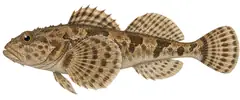
Siberian bullhead
Cottus poecilopus
Small bottom-dwelling fish of cold, fast-flowing streams, similar to the European bullhead but with spotted pelvic fins.
There's more in the app
This species' bite index, recommended baits and methods, and the rules of the day for every water. Offline too.
Soon on Android and iPhone