Description
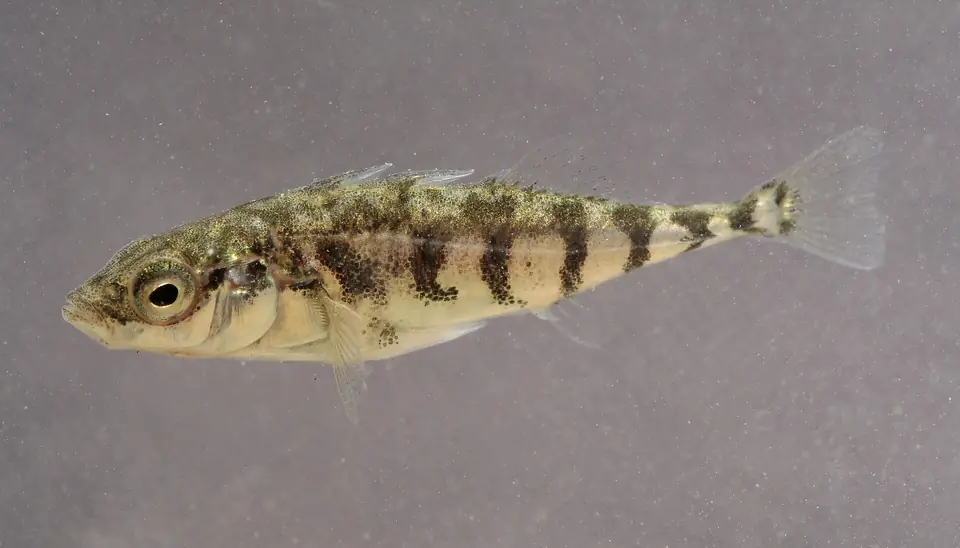
Small fish with three dorsal spines, very widespread in the northern hemisphere in fresh, brackish and marine waters. In Austria it is the only stickleback listed and is treated as non-native.
How to identify it
Three sturdy dorsal spines not joined by a membrane, pelvic fins modified into erectile spines, body without scales but with lateral bony plates. The breeding male has a red belly.
Appearance
Silvery with dark marbling, up to about 7–11 cm (usually much less). Males in spawning dress have an orange-red belly and turquoise iris. Transparent fins.
Habitat and habits
Banks of still and slow waters with vegetation, sandy or muddy bottom. It lives in shoals. Some coastal populations ascend rivers to breed.
Where it lives
Northern hemisphere: Europe, northern Asia, North America. In Austria it is considered non-native.
Conservation status
IUCN: least concern (LC). Austrian Red List: not evaluated (NE), because it is considered non-indigenous.
Can be confused with
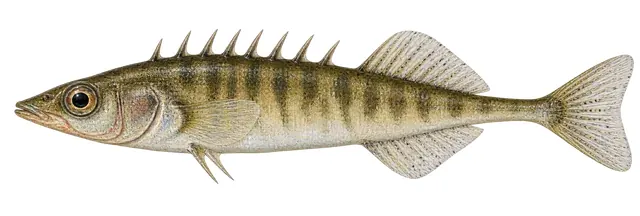
Nine-spined stickleback (Pungitius pungitius): has nine dorsal spines.
Related species and forms
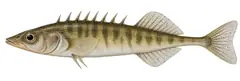
Ten-spined stickleback
Pungitius pungitius
Small fish with a row of isolated dorsal spines.
There's more in the app
This species' bite index, recommended baits and methods, and the rules of the day for every water. Offline too.
Soon on Android and iPhone