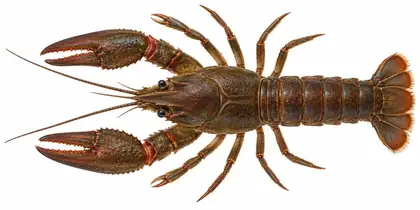
Non-native invasive crayfish
Astacidea
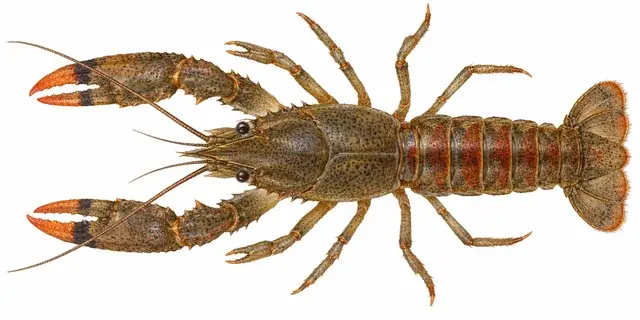
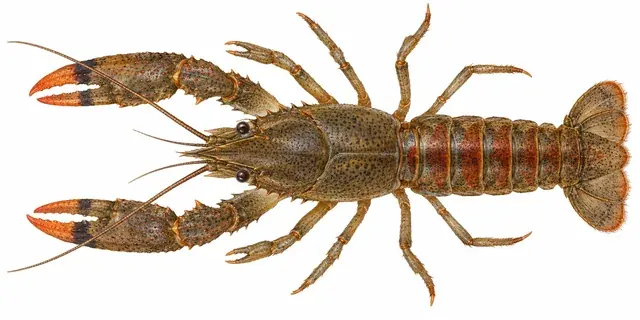
Barbel illustration
Description
Decapod crustaceans introduced into central Europe: the spiny-cheek crayfish (Faxonius limosus), Faxonius immunis, the signal crayfish (Pacifastacus leniusculus), the red swamp crayfish (Procambarus clarkii) and the narrow-clawed crayfish (Pontastacus leptodactylus). The first four species are native to North America, the last to the Black Sea and Caspian area. The North American crayfish carry crayfish plague and harm native species.
How to identify it
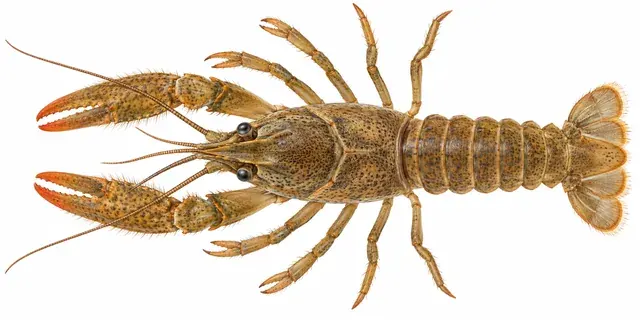
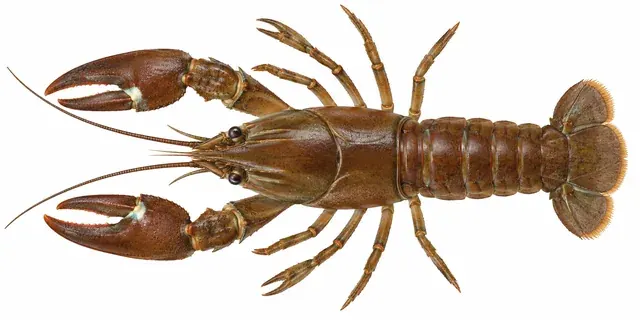
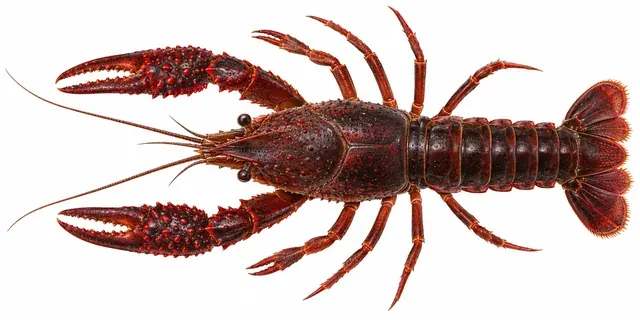
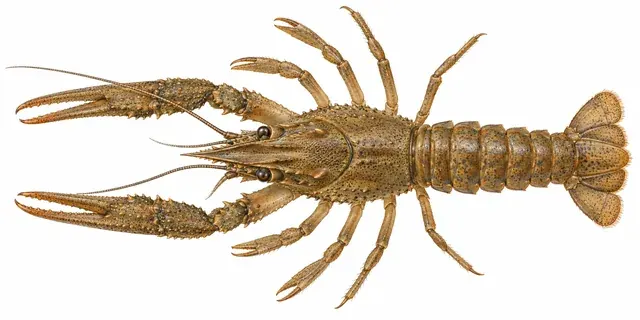
F. limosus has a row of spines on the cheeks, orange claw tips with a dark band and rust-red bands on the abdomen, with an olive-grey or brownish body. F. immunis is beige-brownish, with orange-red claw tips without a dark band and tufts of hair on the inside of the claws. The signal crayfish has a white or blue-greenish patch at the joint of the claws and a brown back. The red swamp crayfish is dark red, with rows of red tubercles on the front legs. The narrow-clawed crayfish is pale, sandy-brown, with very long and slender claw fingers.
Appearance
Size: F. limosus up to about 12 cm, F. immunis usually around 9 cm, P. clarkii usually up to 12 cm, the signal crayfish up to about 16 cm (males), the narrow-clawed crayfish usually 16–18 cm.
Habitat and habits
F. limosus lives in lakes and slow rivers, even polluted ones; F. immunis in slow waters such as ponds, ditches and marshes, and can dig burrows; the signal crayfish in streams, rivers and wetlands, but not in waters with a pH below 6; P. clarkii in warm, slow waters, even temporary ones, and can move across land.
Where it lives
F. limosus was introduced into Germany in 1890 (about 90 specimens in the Oder basin) and has spread across western and central Europe. The signal crayfish has been introduced into Sweden since 1960 and is now present in almost all of Europe. P. clarkii was released in Spain in 1973. F. immunis was found in Europe in 1993 in south-western Germany and is spreading along the Rhine. P. leptodactylus, native to the Pontic-Caspian area, was introduced into some waters of central Europe after the appearance of the plague.
Conservation status
The Union list of invasive alien species of Union concern (EU Regulation 1143/2014) includes F. limosus (since 2016), P. leniusculus (2016), P. clarkii (2016) and F. immunis. The narrow-clawed crayfish is not on the list. F. limosus, P. leniusculus and P. clarkii are carriers of crayfish plague (Aphanomyces astaci), to which they are almost immune, whereas for native crayfish it is lethal. The narrow-clawed crayfish, by contrast, is susceptible to the disease, although some individuals survive and can spread it. IUCN: P. leptodactylus least concern (LC).
Can be confused with
The native crayfish (Astacus astacus, Austropotamobius pallipes and A. torrentium), from which they are distinguished by colours, spots and the shape of the claws.
Related species and forms
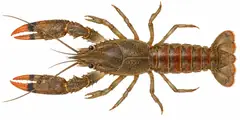
Spiny-cheek crayfish
Faxonius limosus
North American crayfish introduced into Europe in 1890 and today the most common in central-western Europe.
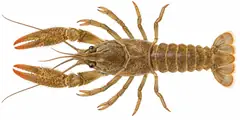
Calico crayfish
Faxonius immunis
North American crayfish called Kalikokrebs (calico crayfish) in German.
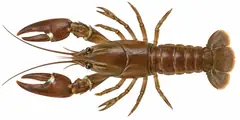
Signal crayfish
Pacifastacus leniusculus
North American crayfish imported into Europe from the 1960s to replace native crayfish decimated by crayfish plague.
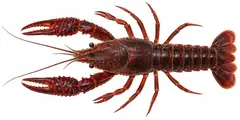
Red Swamp Crayfish
Procambarus clarkii
Crayfish native to the south-eastern United States and northern Mexico, the most widely farmed freshwater crayfish in the world.
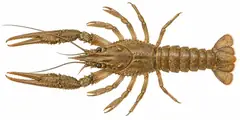
Turkish crayfish
Pontastacus leptodactylus
Freshwater crayfish native to eastern Europe and western Asia, now widespread across much of Europe through introduction.
There's more in the app
This species' bite index, recommended baits and methods, and the rules of the day for every water. Offline too.
Soon on Android and iPhone